
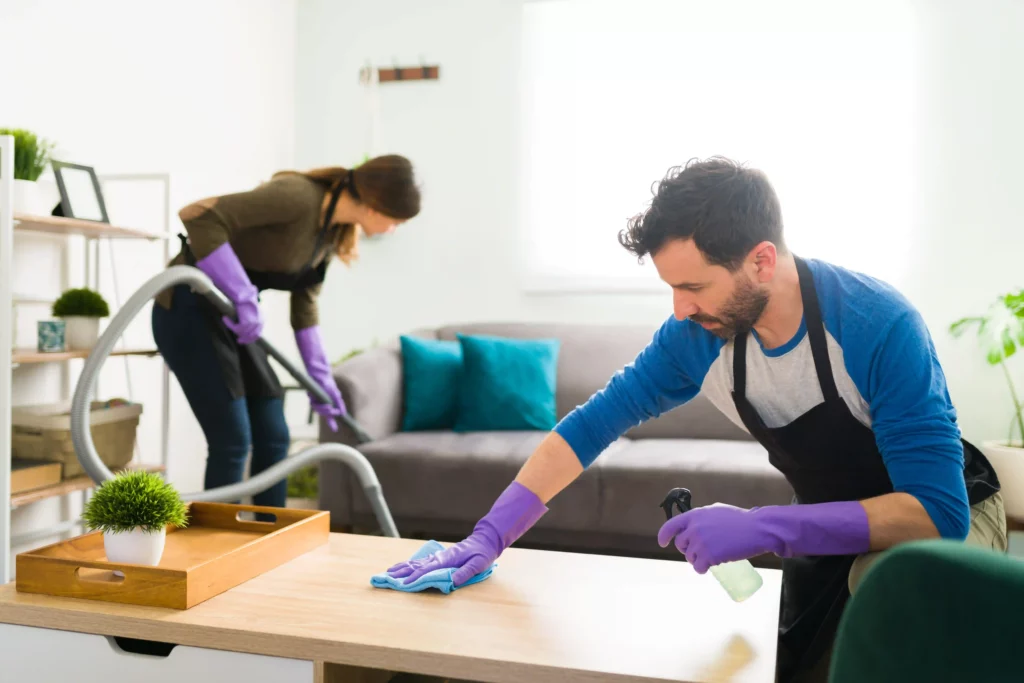

To deep clean your house room by room, start by decluttering each space, then work from the top of the room downward, apply cleaning products to the dirtiest surfaces first and let them soak before scrubbing, and tackle one room at a time until every room is done. This guide covers every room in your home with clear steps, practical tips, and the research behind why a proper deep clean makes such a difference to your home and your health.
How to Deep Clean a House One Room at a Time
To deep clean a house one room at a time, assign each room its own session, complete it fully before moving to the next, and always follow the top-to-bottom sequence. This approach stops dust from falling onto surfaces you have already cleaned and makes the whole process feel manageable rather than overwhelming.
According to global home cleaning industry data, the deep cleaning services market reached over $11 billion in 2024, with residential deep cleans making up the majority of bookings. Homeowners across Leamington Spa, Warwick, and Kenilworth book deep cleans most commonly before moving into a new property, after a renovation, or at the start of spring.
Before you start any room, collect everything you need: microfibre cloths, an all-purpose cleaner, a degreaser for the kitchen, a bathroom limescale remover, a grout brush, white vinegar, baking soda, a HEPA-filter vacuum, a mop, and rubber gloves. Having everything to hand means you will not break your rhythm mid-task.
What Is the Correct Order to Clean a Room?
The correct order to clean a room is to start at the top and work downward. Begin by dusting ceiling corners, light fittings, and the tops of cupboards. Move to surfaces, windows, and furniture next. Finish with the floors last. This way, any dust or debris that falls during the early stages gets picked up when you vacuum and mop at the end, instead of landing back on surfaces you have already cleaned.
What Are the 6 Basic Cleaning Steps?
The 6 basic cleaning steps are: declutter the space, dry dust from top to bottom, apply cleaning products and let them soak, scrub and wipe all surfaces, sanitise high-touch areas, and vacuum or mop the floors. These six steps apply to every room and form the backbone of any effective deep clean. The soaking step is the one most people skip, but it is what makes scrubbing far easier and produces far better results.
What Are the 7 Stages of Cleaning?
The 7 stages of cleaning are: declutter, pre-clean, main clean, rinse, disinfect, dry, and final check. Pre-cleaning removes loose debris before any product is applied. Disinfecting is a separate stage from cleaning because cleaning removes visible dirt while disinfecting kills the bacteria left behind on the surface. These stages are used by professional teams across South Birmingham and Warwickshire and apply directly to a thorough home deep clean.
What Not to Do Before a Deep Cleaning?
What not to do before a deep cleaning is skip the declutter stage, mix multiple chemical products at once, or start cleaning from the floor upward. Clutter on surfaces blocks access to the areas you need to clean. Mixing certain chemicals can also create harmful fumes, so always use one product at a time and ventilate the room well. Another common mistake is trying to deep clean the entire house in a single day. For most homes in Kenilworth and Coventry, assigning one or two rooms per session and doing each one thoroughly produces far better results.
How to Deep Clean Your Kitchen
To deep clean your kitchen, clear every surface first, apply cleaning products to the oven, hob, and appliances and let them soak, then scrub the cupboards, sink, and floors. The kitchen needs the most attention during a deep clean. According to a study by NSF International, the kitchen contains higher levels of bacteria than any other room in the house, with coliform bacteria found in over 75% of dish sponges and in 45% of kitchen sinks tested across 22 families.
What Areas Are Often Missed During Deep Cleaning?
The areas most often missed during deep cleaning are the inside of the oven, behind large appliances like the fridge and washing machine, the extractor fan filter, the seals on the fridge door, skirting boards, light switches, and door handles. Research published by NSF International found that the fridge door seal and the area behind the hob are among the most bacteria-rich surfaces in the home.
Pull the fridge away from the wall to clean behind and underneath it. Wipe down the rubber seal around the fridge door with a diluted antibacterial solution. The NSF International Germiest Places in the Home study found that 36% of tested fridge meat compartments contained both Salmonella and E. coli. Remove all fridge contents, wipe each shelf, and discard anything out of date.
The extractor fan filter above the hob collects grease with every meal cooked. Remove it and soak it in hot soapy water for 20 minutes, then scrub and rinse. Research published in PMC found that the inside of extractor fans and the area above the hob hosted the most diverse bacterial communities of any kitchen surface, precisely because it is cleaned so infrequently. Homes in Royal Leamington Spa with heavy daily cooking will find this area needs particular attention.
Deep Cleaning the Oven
Remove the oven racks and soak them in hot soapy water while you clean the interior. Apply an oven cleaner or a paste made from baking soda and water to all inside surfaces, including the door glass. Leave the product to work for at least 30 minutes, then scrub with a stiff brush and wipe clean with a damp microfibre cloth. For the microwave, heat a bowl of water mixed with a tablespoon of white vinegar for five minutes. The steam loosens all the baked-on food, which then wipes away easily.
Deep Cleaning the Sink and Drains
Scrub the sink basin with a disinfectant cleaner, paying close attention to the area around the taps and drain. According to NSF International, the kitchen sink houses an average of over 11 million microorganisms per 10 square centimetres, making it one of the germiest surfaces in any home. Pour bicarbonate of soda followed by white vinegar down the drain to break up build-up, then flush with boiling water.
Homeowners in Royal Leamington Spa dealing with hard water will notice limescale build-up around the tap base and the drain. A purpose-made limescale remover, or a cloth soaked in white vinegar and left against the tap for 15 minutes, dissolves this effectively. This is the same approach used as part of a professional deep home cleaning service in Warwickshire.
How to Deep Clean Your Bathroom
To deep clean your bathroom, apply limescale remover to taps, the showerhead, and tiles first so it can soak, then scrub the toilet, clean the grout, polish mirrors and glass, and finish with the floor. According to Allergy UK, bathrooms are a primary source of mould spores, which can trigger allergic reactions and worsen asthma symptoms. The areas around the bath, shower tray, and window frames are the most common places for mould to take hold in UK homes.
Why Put Dawn in the Bathtub at Night?
Putting washing-up liquid in the bathtub at night works because the surfactants in the liquid break down soap scum and body oil that has built up on the surface while you sleep. Apply a thin layer across the bath surface, leave it overnight, then rinse and wipe in the morning. This is a useful method for tackling a bathtub that has not been deep cleaned in a while, as the extended contact time does the hard work for you without any scrubbing.
What Two Areas Have the Highest Risk for Cleaning?
The two areas with the highest risk for cleaning are the kitchen, because of bacteria contamination from food and raw meat near hot surfaces and chemical products, and the bathroom, because of mould, limescale, and slippery wet surfaces. NSF International confirmed that while most people assume the bathroom is the germiest room, the kitchen actually tests higher for coliform bacteria. In the bathroom, the toothbrush holder tested as the third germiest item in the whole house, with the toilet seat ranking far lower than most people expect.
When scrubbing grout lines, use a stiff-bristled brush and a baking soda paste. Work in small sections and rinse as you go. The grout around the shower tray is where mould most often takes hold, especially in older Warwick and Coventry properties with less ventilation. After cleaning, applying a grout sealer helps prevent future mould growth.
For the toilet, apply cleaner inside the bowl and leave it while you clean the rest of the bathroom. Wipe the outside of the toilet, including behind and around the base, with a disinfectant spray. Research from the University of Arizona found that flushing with the lid open can spread fine spray up to six feet, meaning toothbrush holders and towels can carry bacteria. Always flush with the lid closed.
What Is Grandma's Simple Trick to Eliminate Dust?
Grandma's simple trick to eliminate dust is to wipe surfaces with a slightly damp cloth rather than a dry one. A dry cloth or feather duster throws dust back into the air where it stays airborne for hours before settling again. A damp cloth traps and removes dust particles on first contact. According to Allergy UK, avoiding feather dusters and using damp microfibre cloths is one of the most effective steps for reducing dust mite allergens in the home. Wipe skirting boards, behind the toilet, and around light fittings in the bathroom with a damp cloth during every deep clean.
How to Deep Clean Your Bedroom
To deep clean your bedroom, strip the bed and wash all bedding, vacuum under the bed and behind furniture, wipe all surfaces and skirting boards, treat the mattress with baking soda, and finish with the floor. According to Allergy UK, washing bedding at 60 degrees Celsius or above is the only way to kill house dust mites. Washing at lower temperatures removes allergens temporarily, but the mites survive and produce new allergens within days.
What Is the Hardest Thing to Clean in a House?
The hardest thing to clean in a house is the mattress, because it cannot be put in a washing machine and it accumulates years of dead skin cells, dust mites, and moisture deep within its layers. The American Lung Association confirms that dust mite allergens settle deep into mattresses, pillows, carpets, and upholstered furniture, which is why surface cleaning alone does not remove them.
To deep clean a mattress, sprinkle baking soda over the entire surface and leave it for at least 45 minutes. The baking soda absorbs moisture and neutralises odours. Then vacuum the entire surface using the upholstery attachment. Flip or rotate the mattress afterwards. HEPA filter vacuums are the most effective for this task, removing 99.7% of particles as small as 0.1 microns, according to research published in PMC.
How Do You Deep Clean a House That Hasn't Been Cleaned in Years?
To deep clean a house that has not been cleaned in years, start with the most-used rooms first, plan for multiple sessions across several days, and allow extra soak time for cleaning products to cut through heavy grease and limescale. Begin every room with a full declutter before any cleaning product is applied. Do not attempt to complete the entire property in one session.
For heavily neglected properties, professional help is often the most practical solution. A move-in cleaning service covers the entire property from top to bottom, including inside cupboards, appliances, and all the areas a DIY clean tends to miss. This is particularly useful for homes in Southam, Stratford-upon-Avon, and Wellesbourne that have been empty for a period.
Do and Don'ts in a Clean Room
The dos in a clean bedroom are: vacuum under the bed regularly, wash bedding at 60°C or above at least every two weeks, wipe surfaces with a damp cloth, and keep clutter off the floor. The don'ts are: storing items under the bed which traps dust and feeds dust mites, leaving windows permanently closed which raises humidity, and skipping the area behind radiators where dust accumulates heavily.
According to research published in PMC on house dust mite allergens, the bedroom is the primary location for allergen control because most people spend seven to eight hours per night in direct contact with their mattress and pillows. If indoor humidity rises above 50%, dust mites multiply rapidly, according to Airthings indoor air quality research. Opening windows regularly in homes across Warwickshire is one of the simplest ways to keep this under control.
How to Deep Clean Your Living Room
To deep clean your living room, vacuum all upholstered furniture including beneath the cushions, dust all surfaces and shelves from top to bottom, wipe electronics, clean skirting boards and door frames, and finish with the floor. According to the Asthma and Allergy Foundation of America, eight out of ten people are regularly exposed to dust mites and six out of ten are exposed to cat or dog dander. The living room is where both of these allergens accumulate fastest.
What Do Maids Use to Make a House Smell Good?
What maids use to make a house smell good is thorough cleaning to remove the source of odours, bicarbonate of soda to absorb lingering smells from upholstery and carpets, and proper ventilation to move fresh air through the space. Professional cleaners do not rely on air fresheners to mask smells. They remove the cause. The most common sources of bad smells in living rooms are sofas and carpets that have absorbed body odour, pet dander, and moisture over time.
Sprinkle bicarbonate of soda onto sofas and carpets, leave for 15 to 20 minutes, then vacuum thoroughly. This method is used by professional teams across Leamington Spa and Coventry and is far more effective than spraying a fragrance product. Open windows during and after cleaning to let stale air out and fresh air in.
How to Clean a Large Messy Room in as Little as 30 Minutes
To clean a large messy room in as little as 30 minutes, use the one-pass method: take a bin bag and a laundry basket with you, remove all rubbish and all items that belong in other rooms first, then dust and wipe surfaces quickly with a microfibre cloth before finishing with a fast vacuum. This is not a deep clean but it restores order fast and sets you up for a more thorough session later.
Regular upkeep between deep cleans is covered by a standard home cleaning service, which keeps your home tidy week to week without the effort of a full deep clean every time.
How Do You Make a House Smell Fresh?
To make a house smell fresh, eliminate the sources of odour rather than covering them up. Wash soft furnishings, vacuum carpets and upholstery regularly, clean bins thoroughly, treat mould in damp areas, and keep good airflow through the home. According to Allergy UK, using heavy chemical sprays and air fresheners can actually add to indoor air pollution rather than improving it, making ventilation and source removal the far better approach.
How to Deep Clean Your Floors
To deep clean your floors, sweep or vacuum thoroughly first to remove loose debris, scrub grout lines on tile floors with a stiff brush and baking soda paste, then mop with a cleaner suitable for your floor type. Global deep cleaning market research from 2024 found that floor care accounted for nearly 31% of all deep cleaning work by volume, making it the single largest category of cleaning tasks in any home.
When Mopping a Room, Where Should You Start?
When mopping a room, you should start from the corner furthest from the door and work your way backward toward the exit. This means you are always mopping onto an unmopped section and you never have to walk across a freshly cleaned floor to get out. This prevents footprints and stops you from re-contaminating areas you have just cleaned.
Change your mop water as soon as it turns dirty. Mopping with dirty water spreads bacteria rather than removing it. For kitchen floors in Warwickshire homes, a floor cleaner with disinfectant properties is recommended, especially near the cooker and sink where grease and food residue collect most.
How to Clean Your House Like a Professional
To clean your house like a professional, work in a consistent pattern through every room, carry all your supplies in a caddy so you never walk back and forth, set a timer per room to stay on track, and use the right product for each surface rather than one general cleaner for everything. When cleaning enclosed spaces like cupboards, empty them fully first, wipe inside, then return the contents.
Professional cleaners serving homes in Kenilworth, Warwick, and Leamington Spa follow a strict sequence: declutter, dry dust top to bottom, apply products and let them soak, scrub, wipe, sanitise high-touch points, then clean floors last. The soak time is the step most people skip, but it is what separates a surface clean from a true deep clean.
What Is the 20 Minute Rule in Cleaning?
The 20 minute rule in cleaning means committing to 20 focused minutes of cleaning per day rather than letting tasks pile up into a bigger problem. Small daily sessions stop rooms from reaching a state where an urgent full deep clean is needed. This rule works best as a maintenance approach between professional deep cleans, especially for kitchens and bathrooms where grease and limescale build quickly if left unchecked.
What Is the Fastest Way to Clean a Hoarder's House?
The fastest way to clean a hoarder's house is to focus on removal first and cleaning second. Bring large rubbish bags and boxes for donating, then sort everything into three groups: keep, donate, and discard. Clear a room completely before any cleaning begins. Trying to clean around clutter is both inefficient and ineffective because you simply cannot access the surfaces that need attention.
For heavily cluttered properties across South Birmingham and Warwickshire, breaking the work across multiple days is far more productive than trying to complete everything at once. Many households find that booking a professional clean after completing the declutter stage gives them the best results, as cleaners can then reach every surface properly.
How to Start Cleaning an Extremely Dirty Room
To start cleaning an extremely dirty room, remove everything that does not belong there, bag up all rubbish, then apply cleaning products to the dirtiest surfaces and let them soak while you continue to declutter. Break the room into small zones and complete one zone fully before moving to the next. Do not attempt to tackle the entire room at once or you will feel overwhelmed and stop before it is finished.
For properties where rooms have been neglected for a long time, a professional deep cleaning service in Warwickshire is often the fastest and most thorough option. Trained cleaners bring professional-grade products and equipment that cut through years of built-up grime far more efficiently than standard household products.
What Are the Disadvantages of Deep Cleaning?
The disadvantages of deep cleaning are that it is time-consuming, physically demanding, and requires specific products and tools to do properly. A full home deep clean takes anywhere from three hours for a small flat to a full day or more for a larger property. For households in Coventry, Solihull, and Stratford-upon-Avon, the physical effort and time involved is one of the main reasons people choose to book a professional service rather than tackle it alone.
How Long Does a Deep Cleaning Typically Take?
A deep cleaning typically takes between three and eight hours depending on the size of the property and how long it has been since the last deep clean. A one-bedroom flat that is cleaned regularly may take three to four hours. A three or four-bedroom house that has not been deep cleaned in several months can take a full working day. Professional cleaning teams from Leamington Spa and across Warwickshire assess each property before confirming a time estimate.
For landlords preparing for new tenants, timing matters. A professional move-out cleaning service covers the entire property to the standard required by most letting agents in the region, including inside appliances, blinds, and cupboards.
Deep Cleaning Checklist by Room: A Quick Reference
RoomKey Deep Cleaning TasksHow OftenKitchenInside oven, behind fridge, extractor fan filter, sink and drains, fridge seals, microwave, cupboard frontsEvery 3 to 6 monthsBathroomGrout scrubbing, limescale removal, toilet base and behind, mould treatment, shower screen polishEvery 3 to 6 monthsBedroomMattress baking soda treatment, bedding at 60°C, behind radiators, under bed, inside wardrobesEvery 3 to 6 monthsLiving RoomUpholstery vacuum, skirting boards, electronics wipe-down, carpet deodorising, behind furnitureEvery 3 to 6 monthsFloorsGrout scrubbing, mop from far corner to door, skirting boards, under furnitureEvery 1 to 3 monthsHigh-Touch SurfacesLight switches, door handles, remote controls, appliance knobs, tapsMonthly
Sources: NSF International Germiest Places in the Home Study; Allergy UK Indoor Air Quality guidance; global home deep cleaning market data (2024); professional cleaning service guidelines, Beyond House Cleaning, Warwickshire.
Frequently Asked Questions
How Often Should You Deep Clean Your Home in Leamington Spa or Warwickshire?
You should deep clean your home in Leamington Spa or Warwickshire at least every three to six months. Most professional cleaning guidance recommends a full deep clean twice a year for the average household. Homes with pets, young children, or allergy sufferers may benefit from deep cleaning every three months. According to Asthma and Lung UK's 2024 Life With a Lung Condition survey, 1 in 2 people with a lung condition reported that dust made their symptoms worse, making regular deep cleaning especially important for those households.
What Not to Do When Decluttering Before a Deep Clean?
What not to do when decluttering before a deep clean is move items from one room to another rather than dealing with them properly. This relocates clutter rather than removing it from your home. Do not rush the declutter stage. A thorough clear-out before cleaning means every surface is accessible. Sort into three clear categories: keep, donate, and discard.
What Is the 27 Decluttering Hack?
The 27 decluttering hack is the method of removing exactly 27 items from your home in a single session. It works because it is a specific and achievable target that is easy enough not to feel overwhelming but substantial enough to make a noticeable difference. It can be repeated daily or weekly until the clutter in a room is under control. Many households across Kenilworth, Warwick, and South Coventry use this method to prepare their homes before booking a deep clean.
What Is the 5 5 5 Rule for Decluttering?
The 5 5 5 rule for decluttering means asking three questions about each item: Will I use this in the next 5 days? Would replacing it cost less than £5? Would it take less than 5 minutes to get another one if needed? If the answer to all three is yes, you can safely discard or donate it. This rule helps people across Leamington Spa and Warwickshire make faster decisions when clearing a home before a deep clean.
What Is the 30 3 Rule for Cleaning?
The 30 3 rule for cleaning means spending 30 minutes cleaning three times per week on top of your regular daily tidying. This maintenance approach prevents rooms from building up to the level where a full deep clean is needed urgently. Three focused 30-minute sessions spread across the week cover surfaces, bathrooms, and kitchen tasks so your home stays in good condition between professional deep cleans. Households across Leamington Spa and Southam who follow this method find their homes far easier to maintain throughout the year.
Does Deep Cleaning Help With Allergies in Warwickshire Homes?
Yes, deep cleaning does help with allergies in Warwickshire homes. Deep cleaning removes dust, pet dander, mould spores, and dust mite allergens from carpets, upholstery, mattresses, and hidden surfaces that regular cleaning cannot reach. According to the American Lung Association, dust mite allergens settle into bedding, carpets, and furniture and require a thorough deep clean to remove effectively. Homes across Coventry, Rugby, and Stratford-upon-Avon that carry out regular deep cleans consistently report fewer allergy symptoms in their households.
What Is the Difference Between a Standard Clean and a Deep Clean?
A standard clean maintains the surface cleanliness of your home on a regular schedule. A deep clean restores the home by tackling built-up grime, grease, and bacteria in hard-to-reach areas that a standard clean does not touch. A standard clean covers dusting, vacuuming, bathroom sanitation, and kitchen surfaces. A deep clean adds scrubbing inside the oven, cleaning behind appliances, removing limescale, treating grout, wiping skirting boards and door frames, and sanitising all high-touch points. Most professional providers serving Coventry and South Birmingham recommend starting with a deep clean before switching to regular maintenance visits.
Final Thoughts
To deep clean your house room by room effectively, declutter every space first, work from top to bottom, let products soak before scrubbing, and pay closest attention to the kitchen and bathroom where bacteria and allergens build fastest. Do not overlook the areas that standard cleaning skips: behind appliances, inside the oven, grout lines, mattresses, and skirting boards. Following the steps in this guide will leave every room genuinely clean rather than just tidy.
If you live across Leamington Spa, Warwick, Kenilworth, Stratford-upon-Avon, Southam, or anywhere in South Birmingham and Warwickshire and you want a truly thorough result without the effort, the team at Beyond House Cleaning is ready to help. Whether you need a one-off deep clean, a seasonal refresh, or a regular maintenance plan, book your professional clean today and enjoy a genuinely spotless home. Call or text +44 7861 936533, or get a free quote online through our deep home cleaning service page.